


Your alarm goes off, and your phone is already full. A child needs a form signed, traffic is slow, a meeting moved up, and you haven't eaten. By noon you meant to pray, but the day started without you.
You don't need a longer morning to start. You need small prayers placed where your day already turns. These eight daily prayers for everyday life run from waking to bedtime. Each one gives you the exact words, a Scripture anchor, a two-minute journal prompt, and a simple HolyJot habit tip so the prayer doesn't vanish by lunch.
Prayer is still an ordinary rhythm for many people. In the United States, 44% of adults pray at least once a day and another 23% pray weekly or a few times a month, according to Pew Research Center's 2023 to 24 Religious Landscape Study on prayer. That's encouraging, but it also leaves a large group who want a routine and don't know where to put it.
Start with one prayer at one anchor point. Coffee brewing. Car parked. Table set. Lights out. Consistency beats length, especially on weekdays.
1. The Morning Offering

Pray this before you check messages. The Morning Offering dedicates the day's thoughts, words, actions, and sufferings to God before other people set your agenda. Catholic families and schools often recite it at the start of the school day, and parishes still hand out printed cards for mirrors and wallets.
O Jesus, through the Immaculate Heart of Mary, I offer You my prayers, works, joys, and sufferings of this day.
The prayer was promoted by the Apostleship of Prayer, which Jesuit priests helped spread in the nineteenth century. Its strength is intention. You're not promising a perfect day. You're naming your day, including the hard parts, and offering it first.
Make It Specific in Two Minutes
Generic offerings fade fast. After the prayer, write one sentence that starts, Today I offer You. Name the budget review, the drive to practice, the phone call you're avoiding. Specifics turn a recited prayer into a working one.
- Scripture anchor: Pair it with Colossians 3:17 and note one task you'll do in Jesus' name.
- Journal prompt: What joy or suffering do I already expect today, and how will I offer it?
- HolyJot habit tip: Write your own version in your morning HolyJot entry, then set a reminder to revisit it at lunch. Use FaithAI to find cross-references that match your themes.
The trade-off is simple. Said in a rush, it becomes background noise. Said with one named task, it follows you into the room.
2. The Lord's Prayer
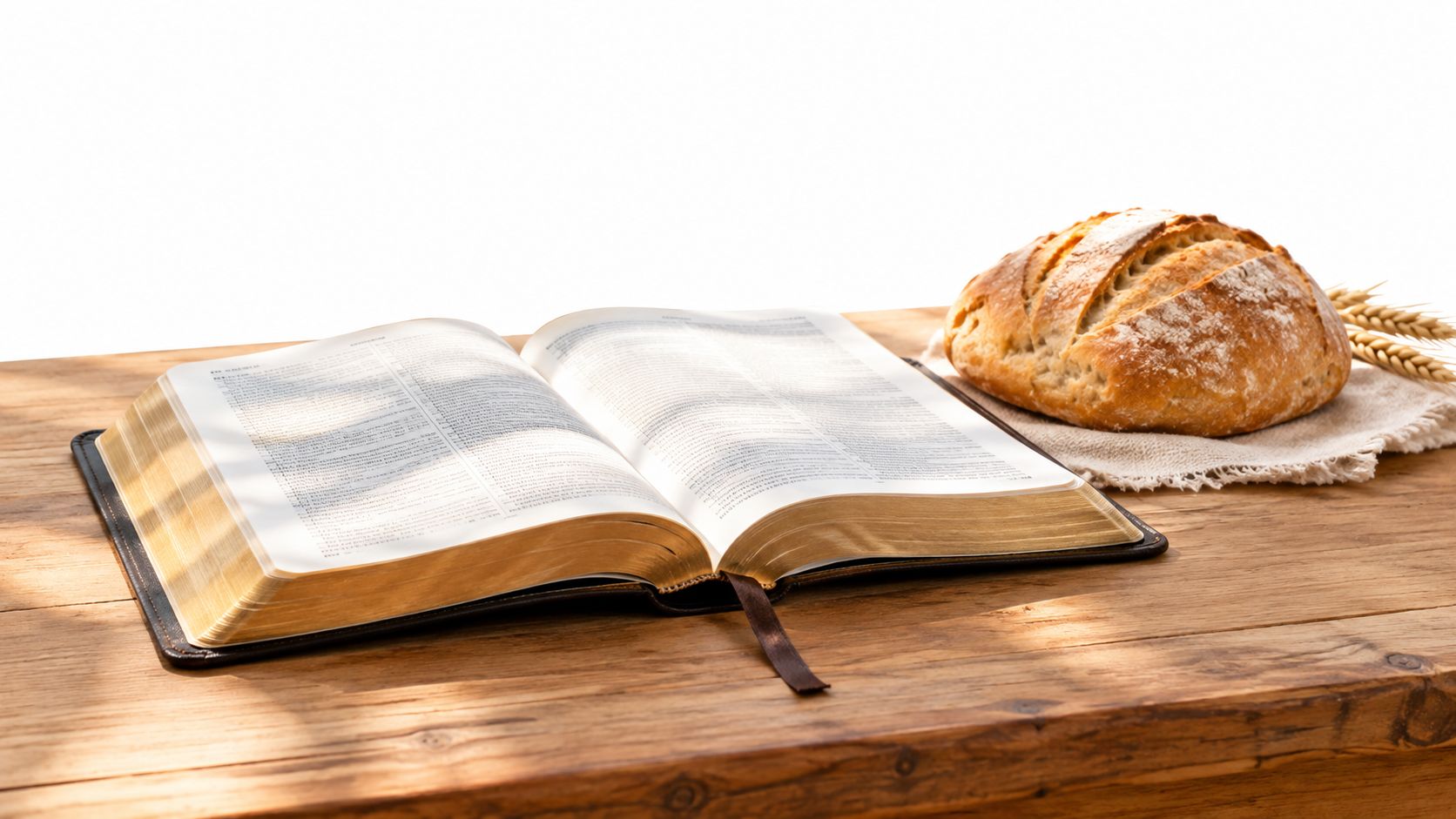
If you only keep one prayer, keep this one. Jesus taught it in Matthew 6:9 to 13, with a shorter form in Luke 11:2 to 4. In a few lines it covers worship, God's kingdom, daily provision, forgiveness, and protection from temptation.
Our Father in heaven, hallowed be your name, your kingdom come, your will be done, on earth as it is in heaven. Give us today our daily bread. And forgive us our debts, as we also have forgiven our debtors. And lead us not into temptation, but deliver us from the evil one.
Churches pray it at services and small groups close with it because everyone can join in. Families use it at meals or bedtime for the same reason. Familiarity helps children and new believers, but it can also make adults rush. Slow down enough to hear each request.
Pray One Line at a Time
Pause after each line and add one sentence of your own. After daily bread, name today's actual need, not next year's worry. After forgive us, name who you need to forgive. That pause is where the prayer stops being memorized text and becomes honest.
- Journal prompt: What is my daily bread today, and what am I trying to carry beyond today?
- HolyJot habit tip: Create a family Community Hub and post one line each morning for shared responses.
- Go deeper: If your words stall, this guide on how to pray effectively with Scripture and structure gives a practical next step.
3. Arrow Prayers (Ejaculatory Prayers)
Some moments don't allow a quiet room. A toddler is melting down in the checkout line. Your manager asks a hard question. A text lands and your chest tightens. Arrow prayers are single sentences shot toward God in the middle of the moment.
The pattern comes from Nehemiah 2:4. The king asks Nehemiah what he wants, and Nehemiah prays before he answers. He doesn't leave the room or open a scroll. He depends on God in real time, then speaks.
Three Arrows Worth Keeping Ready
Write these where you'll see them, on a sticky note, dashboard card, or phone lock screen.
- For patience: Lord, give me patience before I speak.
- For wisdom: Help me say the right thing, and only that.
- For courage: God, be with me in this room.
Parents use these during conflicts or when children are upset because a short prayer changes tone before words escalate. The limit matters too. Arrow prayers support a fuller prayer life, they don't replace unhurried time with God.
Practical rule: If you have ten seconds, you have time to pray before you react.
Pair each arrow with a verse from this collection of Bible verses about prayer for daily dependence so the phrase stays rooted in Scripture. In HolyJot, log your recurring triggers for a week. You'll spot patterns, like Sunday night email or school drop-off, and you can place an arrow there on purpose.
Two-minute journal prompt: When did I react fastest today, and what arrow will I pray next time that moment comes?
4. The Serenity Prayer

Stress often comes from treating every problem as yours to fix. The Serenity Prayer, widely attributed to theologian Reinhold Niebuhr in the early 1930s, sorts a situation before you act on it.
God, grant me the serenity to accept the things I cannot change, courage to change the things I can, and wisdom to know the difference.
Recovery groups, including Alcoholics Anonymous, recite it at the close of meetings because the sorting has to happen daily. It works the same way before a difficult conversation, a medical result, or a decision at work. You're asking for acceptance, courage, and wisdom, not control.
Put It on Paper
Write the prayer at the top of a page. Draw two columns. On the left, list what you cannot change, like another adult's choice or yesterday's mistake. On the right, list what you can change, like your apology, your boundary, or your next phone call.
- Scripture anchor: Read Philippians 4:6 to 7 and present the left column to God with thanksgiving.
- Journal prompt: What am I gripping that belongs in the cannot change column?
- HolyJot habit tip: Create a recurring morning entry that tracks what you release and what you act on.
For heavier seasons, pair it with this guidance on prayer during difficult times when answers feel slow. Say it aloud in the car before you walk in. Hearing your own voice settle helps.
5. The Jesus Prayer
When anxious thoughts loop, a long prayer can feel impossible. The Jesus Prayer gives your mind one faithful sentence to return to. It has roots in early Christian monastic practice and remains central to Eastern Orthodox spirituality.
Lord Jesus Christ, Son of God, have mercy on me, a sinner.
Practitioners repeat it slowly, often in rhythm with breathing. Inhale on Lord Jesus Christ, Son of God. Exhale on have mercy on me, a sinner. The repetition isn't empty if your attention keeps returning with humility. It becomes empty when you chase a feeling instead of seeking Christ.
Start Small and Stay Honest
Begin with five quiet minutes in a parked car, a waiting room, or a chair before anyone else wakes. Eastern Orthodox believers often fold it into a daily prayer rule. Western Christians use it as a centering prayer during anxious moments at desks, in hospital corridors, or before sleep.
- Scripture anchor: Pair it with Psalm 51, especially its plea for mercy and a clean heart.
- Journal prompt: What do I need mercy for today, stated plainly in one sentence?
- HolyJot habit tip: Log a short reflection after each session and note what distracted you most.
Don't measure success by calm alone. Some days you'll feel settled, some days you won't. The gain is training your attention to return to Jesus instead of following every worried thought to its end.
6. The Prayer of Jabez
Jabez appears briefly in a genealogy, then prays one bold prayer. You'll find it in 1 Chronicles 4:10, and it asks God for blessing, expanded territory, God's hand, and protection from harm and pain.
Oh that you would bless me and enlarge my border, and that your hand might be with me, and that you would keep me from harm and from pain!
Bruce Wilkinson's 2000 book The Prayer of Jabez popularized the passage as a daily petition. Many individuals tried a 30-day challenge after its release, and church groups used it as a shared prayer focus. That popularity brought a risk. Read as a formula for getting more, it disappoints. Read in context, it's a prayer of dependence from a man whose name was tied to pain.
Pray It With Context
Read 1 Chronicles 4:9 to 10 before you pray, every time at first. Then rewrite the four requests in your own words for your work, family, or ministry. Enlarge my border might mean influence with a struggling neighbor, not a bigger platform.
- Journal prompt: Where do I need God's hand with me today, not just God's gifts for me?
- HolyJot habit tip: Turn the four requests into dated goals and track answered prayers in a monthly review entry.
- Guardrail: If a request is only about comfort, rewrite it until it includes trust and service.
This prayer works best on workdays when you need focus. It reminds you to ask boldly while leaving the shape of the answer to God.
7. Traditional Table Grace
Dinner is ready, someone's already reaching, and one child is telling a story at full volume. Table grace gathers that noise for ten seconds and points it toward gratitude. It's one of the most widely used everyday prayers in English-speaking Christian homes.
Come, Lord Jesus, be our guest, and let these gifts to us be blessed. Amen.
The words do two things well. They invite Jesus to the table as guest, and they name the food as a gift. Families recite it at dinner, and small groups open fellowship meals with it, because guests can follow along even if they've never prayed aloud.
Keep Grace From Going Flat
Rotate who leads, including children. Before the blessing, invite each person to name one specific thing they're thankful for. Not family every night, but the neighbor who jumped the car battery or the teacher who stayed late.
- Scripture anchor: Add Psalm 107:1 on Sundays, or when a meal marks an answered prayer.
- Journal prompt: What gift did we receive today that we didn't earn or expect?
- HolyJot habit tip: Create a family Community Hub for shared meal prayer requests, then pray one request at the table each night.
The trade-off is pace. A rushed grace teaches kids that gratitude is a speed bump before eating. A brief pause, eyes up, voices together, teaches them it's the point of gathering. Short doesn't have to mean careless.
8. The Daily Examen
End the day by looking back with God, not just replaying what went wrong. The Daily Examen comes from Ignatius of Loyola and his Spiritual Exercises, approved in 1548. Ignatian retreat centers and spiritual directors still teach it widely.
A family at the table shows the same instinct this prayer builds at night, pausing together before the day moves on.

The practice moves through gratitude, a review of the day, attention to emotions, one moment to face, and a look toward tomorrow. It takes about 10 to 15 minutes, though a tired parent can do a faithful short version in bed. You're asking where God was present in ordinary events, not grading your performance.
Five Steps for Tonight
- Give thanks: Name two gifts from today.
- Ask for light: Pray, Lord, show me today as You see it.
- Review: Walk through the hours and notice strong emotions.
- Respond: Thank God, confess, or ask for help with one moment.
- Look ahead: Choose one hope for tomorrow.
This short walkthrough helps if you want to hear the rhythm before you try it tonight.
Use the five steps as headings in a HolyJot entry each night and aim for seven consecutive evenings. Journal prompt: Where did I feel most alive to God today, and where did I feel most distant? Share one highlight in a small group Hub if accountability helps you return tomorrow.
8 Daily Prayers for Everyday Life: Comparison Guide
| Prayer | 🔄 Process / Complexity | ⚡ Time / Resources | 📊 Expected Outcome | Ideal Use Case | ⭐ Key Advantage |
|---|---|---|---|---|---|
| The Morning Offering | Simple, adaptable daily prayer | Brief; morning, no materials needed | Sets an intention to dedicate the day to God | Starting the day at home, school, or church | 💡 Connects everyday work and relationships with faith |
| The Lord's Prayer | Structured prayer of praise and petition | Brief; no materials needed | Covers worship, provision, forgiveness, and protection | Personal devotion, family prayer, or worship services | Familiar across many Christian traditions |
| Arrow Prayers | Spontaneous, often a short phrase | Seconds; no special setting needed | Offers immediate focus or help in a specific moment | Stress, decisions, or interruptions during the day | ⚡ Fits easily into everyday activities |
| The Serenity Prayer | Memorized three-part petition | Brief; spoken or written | Encourages acceptance, action, and discernment | Stressful situations or difficult decisions | 💡 Distinguishes what can and cannot be changed |
| The Jesus Prayer | Repeated phrase; may be paired with breathing | A few minutes or more; optional prayer rope | Cultivates humility and attentiveness to God | Quiet reflection or prayer during routine tasks | ⭐ Simple form supports a regular prayer habit |
| The Prayer of Jabez | Four-part petition, easily personalized | Brief; no materials needed | Focuses prayer on blessing, guidance, and protection | Daily petitions or group prayer challenges | Offers a clear structure for specific requests |
| Traditional Table Grace | Short blessing, said individually or together | Under 30 seconds; no materials needed | Expresses gratitude for food and provision | Family meals and fellowship gatherings | ⚡ Builds a shared devotional habit with little time |
| The Daily Examen | Five-step review of the day | About 10–15 minutes; writing optional | Supports gratitude, self-awareness, and discernment | Evening reflection or journaling | 📊 Helps identify patterns and moments of spiritual significance |
Start Tomorrow With One Small Prayer Habit
Don't adopt all eight prayers on Monday. That plan usually collapses by Wednesday, and then you blame yourself instead of the plan. Pick one morning prayer and one evening prayer, attach each to something you already do, and give it seven days.
A simple pairing works well. Pray the Morning Offering while coffee brews or before you open your laptop. Pray the Daily Examen after you plug in your phone for the night. If mornings are chaotic with small children, use the Lord's Prayer in the car instead. If evenings are unpredictable, use table grace as your anchor and add one sentence of review after it.
A Seven-Day Starter Plan
- Days one and two: Pray your morning choice and write the two-minute prompt, nothing more.
- Days three and four: Add your evening prayer and one arrow prayer at your hardest daily moment.
- Days five to seven: Review your entries, thank God for one answered prayer, and adjust timing if an anchor isn't working.
Link each prayer to its Scripture passage in HolyJot so you're not hunting for verses when you're tired. Use a streak to track consistency, but treat it as a record, not a verdict. A missed day is data about your schedule. Move the prayer earlier, shorten it, or tie it to a meal.
Accountability helps when motivation dips, which it will. Invite your spouse, a friend, or your small group into a private Community Hub and share one line a day. Keep it plain. Prayed the Serenity Prayer before my review. Released the outcome, prepared my part. That's enough for someone to pray with you and ask how it went.
These habits travel across cultures because daily prayer itself does. In Pew's cross-national survey, a majority of adults in 14 of 35 countries reported praying at least once a day, including 95% in Indonesia and 84% in Kenya and Nigeria, according to Pew Research Center's global study of spiritual and religious practices. Routines differ by place and tradition, so choose forms that fit your household.
Tomorrow, pray one short prayer before your phone gets your attention. Write two honest lines. Repeat the next day. That's how daily prayers for everyday life stop being an intention and start becoming the way your day is held together.
Start your seven-day rhythm in HolyJot, where you can link each prayer to Scripture, save your two-minute journal prompts, set reminders, and track answered prayers over time. Bring your family or small group into a private Community Hub so you can share one line a day and keep each other returning. Open your first morning entry tonight, write tomorrow's offering, and let a small habit carry you through the week.