


The most popular advice on how to manage church members usually starts with attendance, reminders, and follow-up calls. That advice is incomplete. A full room can still contain people who have no trusted relationship, no meaningful role, and no clear way to ask for help.
Church administration works better when leaders measure relational depth, not just headcount. A useful system connects member information, pastoral care, groups, service, communication, and feedback without reducing people to activity scores. The practical question isn't only, “Who came on Sunday?” It's, “Who is known, supported, involved, and still connected between Sundays?”
Redefining Engagement Beyond Sunday Attendance
Sunday attendance is useful, but it cannot define congregational health. The 2023–24 Religious Life Study found that 40% of U.S. adults participate in religious services at least monthly when in-person, online, or television participation is combined. 33% attend in person at least once or twice a month, while 49% seldom or never attend in person. Pew Research Center's findings on religious attendance and congregational involvement illustrates why a Sunday-only system overlooks meaningful connection.

A person may watch worship online, attend a weekday group, volunteer occasionally, request prayer, or remain connected with a ministry leader while missing several services. Another person may appear regularly on the attendance list yet have no relationship beyond sitting in the room. Recording both as equally engaged leads to weak follow-up and makes pastoral care feel mechanical.
Find the Sunday-to-Sunday gap
The Sunday-to-Sunday engagement gap is the distance between public attendance and ongoing connection. Leaders can identify it by reviewing patterns over time instead of treating each event as a complete picture:
- Repeat group involvement: Does the person return to the same group, study, or community activity?
- Reciprocal relationships: Can a leader name people who know the member and would notice a change?
- Pastoral contact: Has the person requested prayer, received a care response, or had a meaningful conversation?
- Sustainable service: Does the role fit the member's capacity, or do the same dependable volunteers carry every ministry?
- Progression: Has a visitor moved toward a group, class, volunteer opportunity, or personal follow-up?
Attendance can rise while relationships weaken. A 2025 church-growth dataset reported that group participation increased 14% in absolute terms, while the share of attendees participating in groups fell from 53% to 43%. Serving numbers rose 17%, yet the proportion of attendees serving remained 35%. The Unstuck Church Report shows how numerical growth can coexist with thinner connection.
Practical rule: Treat attendance as a signal for care, not as proof of belonging.
A useful dashboard combines attendance history with group participation, event registration, volunteer activity, communication records, and pastoral preferences. Review those signals to identify welcome opportunities, overextended volunteers, unanswered care needs, and people who have drifted between Sundays. The goal is not to score spiritual performance. It is to know when someone needs rest, a clearer invitation, or a personal conversation.
Building a Consent-Based Member Directory
A directory becomes valuable when it helps a real person respond appropriately. It becomes harmful when leaders collect information without explaining why, share sensitive details casually, or keep records long after consent has changed.
Start with a clear explanation. Tell visitors and members what the directory supports, who can access it, and which fields are optional. A church may need a name and reliable contact method for basic administration, but ministry interests, availability, pastoral-care preferences, family relationships, and communication boundaries should be collected with explicit permission.
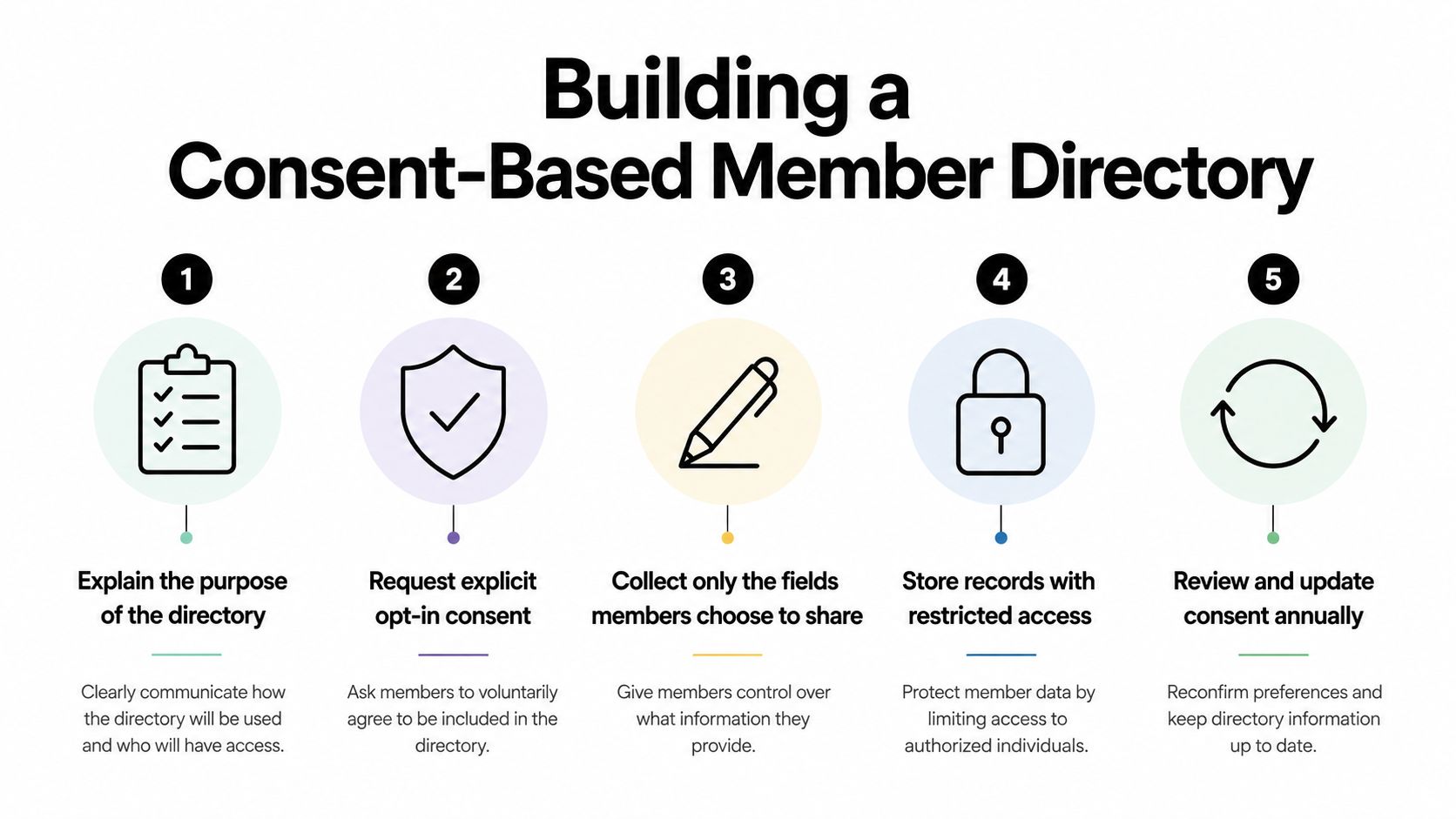
Use a simple intake workflow
A practical onboarding form should make the member's choices visible:
- Explain the purpose. Say whether the information supports pastoral care, group communication, event administration, volunteering, or directory visibility.
- Request opt-in consent. Separate general communication consent from permission to share information with group leaders or publish directory details.
- Collect useful context. Ask about ministry interests, availability, preferred communication channels, accessibility needs, group preferences, and pastoral-care boundaries.
- Restrict access. Give pastors, administrators, group leaders, and ministry coordinators only the information required for their responsibilities.
- Review the record. Invite members to update their preferences when circumstances change, and establish a recurring consent review.
A good record captures context, not gossip. “Prefers text messages” is operationally useful. A detailed private note should be limited to authorized pastoral personnel and handled according to the church's safeguarding and privacy practices.
For churches building community connections, outreach ideas for congregations can help leaders turn general interest into specific opportunities. The directory should then record which opportunities a person wants to explore, rather than automatically enrolling them in every activity.
Keep the database alive
A spreadsheet can hold names, but it rarely gives leaders a reliable history of contact, consent, groups, and next steps. A purpose-built system such as HolyJot's member directory software can organize profiles, roles, groups, attendance, communication logs, and engagement information with controlled access.
The tool doesn't replace trust. It supports trust when leaders use it carefully. Assign responsibility for record quality, remove duplicate profiles, document consent changes, and create a process for correcting inaccurate information. Never allow a directory to become a hidden case file that members cannot understand or update.
Designing the Engagement and Service Pipeline
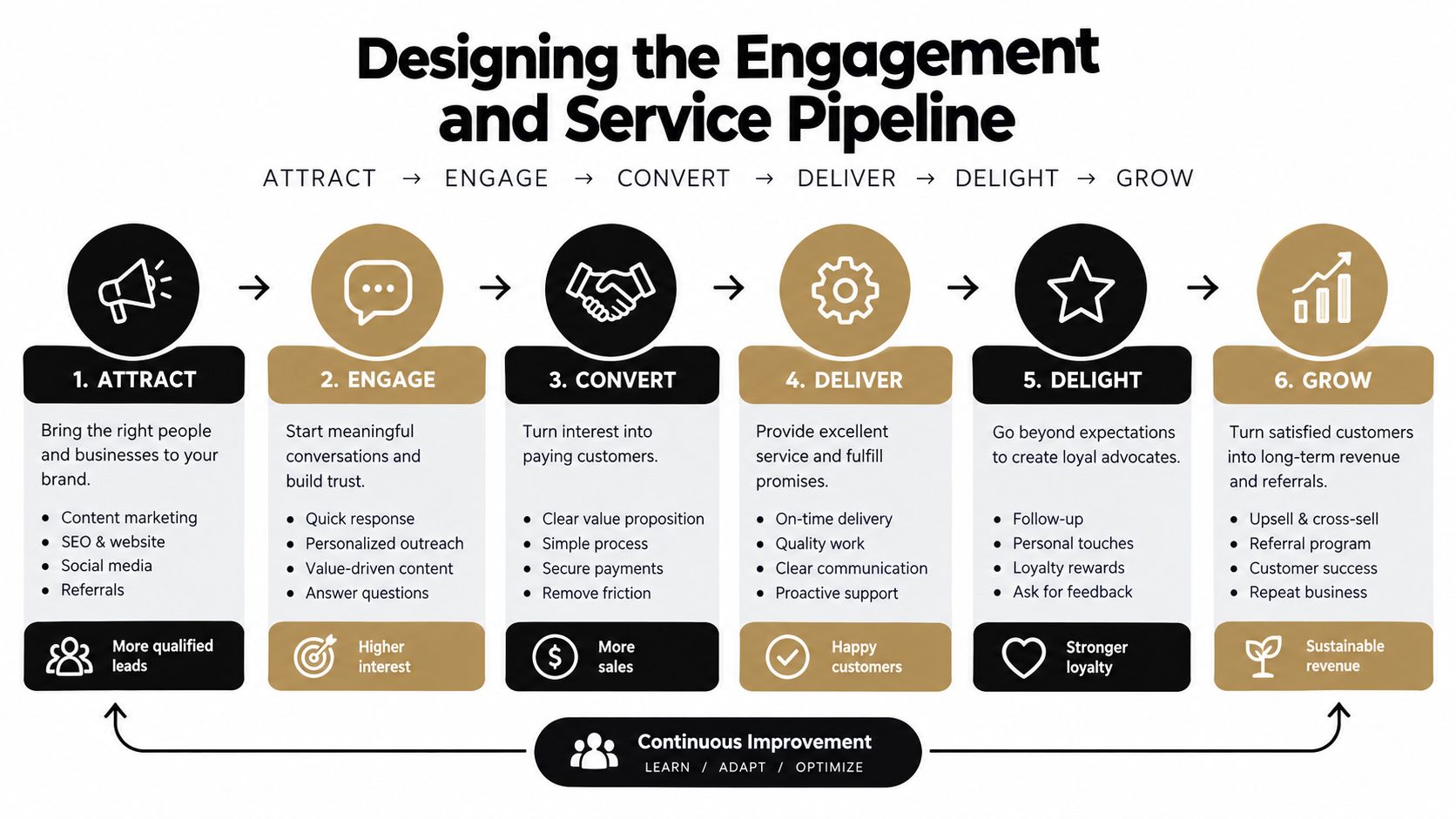
People rarely move from first visit to sustained service through one enthusiastic invitation. They need a clear next step, a role that makes sense, someone responsible for follow-up, and a chance to decide whether the commitment fits.
A workable pipeline looks like this:
- Welcome and permission: Record the visitor's preferred contact method and ask what kind of connection they want.
- Discovery: Learn about interests, availability, previous experience, family commitments, and boundaries.
- Next-step assignment: Offer one specific path, such as a small group, newcomer class, service project, or pastoral conversation.
- Role orientation: Explain the task, expectations, schedule, training, safeguarding requirements, and who provides support.
- Named supervision: Assign a ministry leader who knows the person's role and can answer questions.
- Two-way check-in: Ask what is working, what feels unclear, and whether the member wants to continue, adjust, or pause.
Make roles meaningful
“Can you help wherever needed?” sounds flexible, but it creates uncertainty. A better invitation names the contribution: greeting families before worship, helping a small group contact absent members, preparing food for a community event, coordinating transport, or assisting with prayer requests.
Role clarity matters because volunteers need to understand how their work contributes to the church's mission. The evidence summary of a 117-study synthesis links communication, organizational support, job satisfaction, leader-member exchange, engagement, and organizational commitment with volunteer turnover. It also associates clear role definitions with greater satisfaction and longer service, while orientation and training correlate with stronger retention, more hours, and longer participation. The volunteer recruitment and retention evidence summary supports a practical conclusion: training works best when it accompanies clear responsibility and relational support.
Generic assignments also conceal inequity. The same review found that 74% of volunteers in professional or management activities continued the following year, compared with 53% in general-labor or transportation roles. That doesn't mean every volunteer wants authority or a prestigious title. It does mean leaders should offer development, responsibility, and meaningful contribution rather than reserving interesting work for a small inner circle.
Build a visible handoff
The first leader who welcomes someone shouldn't be expected to manage the entire relationship. Record the next step, assign an owner, set a follow-up date, and mark whether the person responded. If the person declines, record that respectfully and avoid repeated pressure.
Churches that need more operational detail can consult guidance on how to manage church volunteers. A church platform such as HolyJot's member engagement platform can also connect member profiles with roles, groups, attendance, events, communication history, and follow-up responsibilities.
The pipeline should remain pastoral, not transactional. A status such as “needs follow-up” is a prompt for a human conversation, not a judgment about someone's faith or commitment.
Coordinating Volunteers Across Generations
Age-based assumptions create bad assignments. Younger adults aren't automatically disengaged, and older adults don't all want the same traditional schedule. Leaders should ask about motivation, capacity, communication preferences, and desired responsibility before assigning a role.
Early-2025 U.S. data reported weekly volunteering at 24%, up from 15% in 2024, with Gen Z at 21% and Millennials at 19%, compared with 9% among Boomers and 11% among Gen X. Religion News' report on changing church engagement trends challenges the idea that younger adults have no desire to serve. They may respond better to defined projects, flexible commitments, meaningful relationships, and quick feedback.
Match structure to motivation
A church doesn't need separate ministries for every age group. It needs multiple routes into one shared community.
| Generation | Key Motivators | Ideal Role Structure |
|---|---|---|
| Gen Z | Clear purpose, fast feedback, authentic relationships, flexible participation | Short projects, digital coordination, peer mentoring, explicit expectations |
| Millennials | Meaningful contribution, community, manageable commitments, skill development | Time-bounded teams, family-aware scheduling, shared leadership, practical ownership |
| Gen X | Autonomy, competence, efficient communication, dependable systems | Defined responsibilities, flexible scheduling, team coordination, outcome-focused service |
| Boomers | Relational continuity, experience, reliability, personal appreciation | Stable teams, mentoring roles, scheduled service, opportunities to transfer knowledge |
These are starting hypotheses, not labels. A retired member may prefer a short-term project, while a younger parent may want a predictable weekly role. Ask before designing the assignment.
Protect the whole volunteer base
Intergenerational teams work when each person has a real contribution. Pair experience with fresh perspective, but don't turn older members into unpaid trainers or younger members into permanent assistants. Give both people authority appropriate to the task.
Fast feedback doesn't require constant messaging. A brief check-in after a service, a shared schedule, and a clear escalation route often provide enough support. For a deeper explanation of the coordinator's work, volunteer coordinator roles and responsibilities can help churches define ownership without centralizing every decision.
Measure contribution alongside experience. Ask whether members feel known, supported, able to decline, and clear about what happens next. A high participation rate can still hide exhaustion if the same reliable people keep absorbing additional work.
Using Recognition to Drive Long-Term Retention
When volunteers begin to disappear, churches often add training. Training can remove uncertainty, but it doesn't automatically create belonging. Recognition addresses a different need: it shows people that leaders noticed the specific contribution they made.
Longitudinal administrative research at an Indiana nonprofit found that recognizing volunteer contributions with awards predicted retention in the following year, while training had no direct effect on turnover in the overall sample. The research also found an interaction between training and gender, with trained men more likely to stay than trained women. The referenced nonprofit volunteer-retention research suggests that churches shouldn't treat a standard class as a complete retention strategy.
Recognize the work people actually do
Create contribution categories that include visible and hidden labor:
- Service delivery: Greeting, teaching, music, children's ministry, hospitality, and event support.
- Relational care: Prayer support, newcomer contact, group encouragement, and pastoral visits.
- Operational contribution: Scheduling, setup, administration, transport, cleaning, and technical work.
- Leadership development: Mentoring, training, delegation, and helping another volunteer become confident.
Record contributions consistently enough to prevent the platform role from receiving all the attention. Then thank people promptly and specifically. “Thank you for serving” is kind, but “Your call helped that newcomer find a group” connects the action to its effect.
Public appreciation isn't always appropriate. Some members prefer a private message, and pastoral or family circumstances may make public visibility uncomfortable. Ask about recognition preferences, and don't publish names or photographs without permission.
Test whether recognition is equitable
Recognition should reinforce belonging, not create a leaderboard. Review who receives thanks, which ministries remain invisible, and whether leaders repeatedly praise the same people. Invite volunteers to describe what sincere appreciation looks like to them.
Track retention for recognized and non-recognized participants while considering baseline involvement, ministry, tenure, age, gender, and accessibility needs. The purpose isn't to reduce gratitude to an experiment. It's to discover whether the church's recognition habits are reaching the people who carry essential work without fanfare.
For additional ideas that can be adapted to church settings, review these practical volunteer retention tips. The principle remains simple: specific appreciation, meaningful responsibility, and responsive supervision work together.
Tracking the Metrics That Matter
Member care improves when the dashboard points a responsible person toward a useful action. Counting every interaction creates activity reports, but it does not show whether people feel known, supported, and able to remain involved.
Attendance still belongs in the picture, alongside connection, care, and volunteer sustainability. As noted earlier, Pew Research Center's research combines in-person, online, and television participation, showing why churches should record more than physical presence. A person who misses Sunday may still join a group, answer a care call, serve during the week, or need a thoughtful check-in. Those signals help reveal the Sunday-to-Sunday engagement gap.
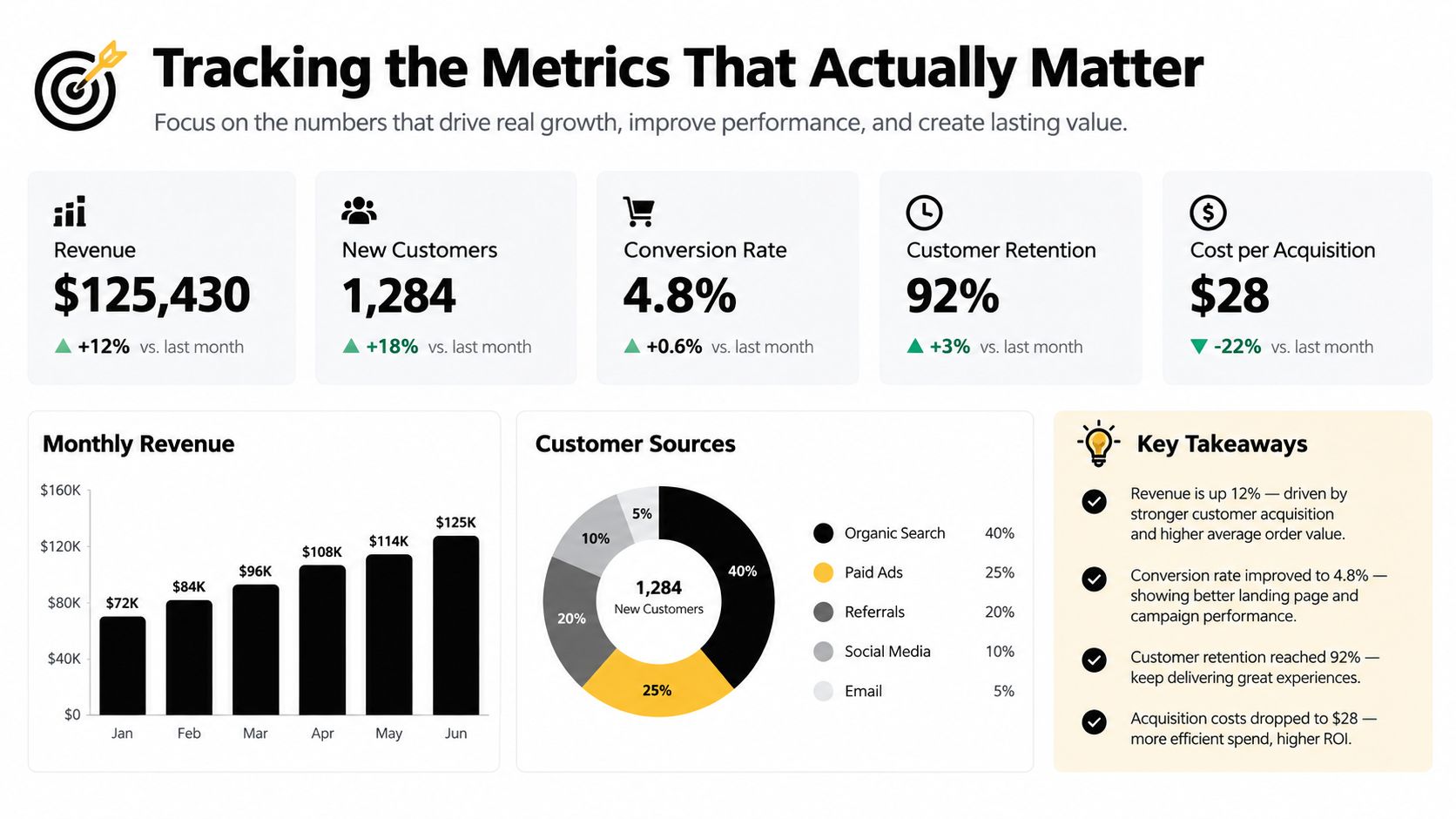
Build a care-focused dashboard
Choose a manageable set of indicators and assign an owner to each one:
- First-30-day follow-up completion: Did someone make the promised contact with a visitor or new member?
- Next-step assignment: Does each person have a suitable invitation instead of an undefined “follow up” status?
- Role-clarity confirmation: Has the volunteer confirmed the task, schedule, boundaries, and supervisor?
- Training completion: Has the person received the orientation required for the role?
- Active participation at 30, 90, and 180 days: Is the person still engaged in the agreed activity?
- Group continuity: Is involvement recurring, or did it end after one event?
- Pastoral-care response time: Has a named leader answered a request within the church's agreed standard?
- Unresolved care cases: Which requests still need ownership or escalation?
- Volunteer sustainability: Are new people rotating into service, or are the same members carrying repeated assignments?
- Member experience: Do people feel known, supported, and free to decline?
Calculate monthly retention as the share of members or volunteers active in the prior period who remain active. Keep that definition stable so leaders can interpret changes consistently. Compare groups by ministry, tenure, age, gender, and accessibility needs, while protecting sensitive information and avoiding conclusions from small or contextless samples.
Turn numbers into conversations
A dashboard should prompt care, not punishment. A missed attendance pattern may reflect illness, caregiving, work, travel, transportation, burnout, or a communication problem. Begin with a permission-based check-in rather than an automated warning.
Set a monthly review rhythm. The administrator checks data quality, ministry leaders review their assigned people, and pastors handle sensitive care or escalation. Each quarter, ask members whether the system feels helpful, intrusive, confusing, or difficult to opt out of.
Use findings to repair the workflow. Late follow-up usually calls for clearer ownership and reminders. Volunteer departures after orientation warrant a review of role fit and supervision. Groups that attract newcomers but few repeat participants may need changes to the welcome, schedule, or group experience.
HolyJot provides a structured place for member profiles, groups, roles, attendance, communication history, events, volunteer coordination, and engagement reporting. Used with consent and pastoral judgment, such a system can help leaders close the Sunday-to-Sunday gap without turning discipleship into surveillance.
HolyJot helps churches organize member directories, groups, roles, attendance, events, volunteer coordination, and communication records in one church management environment. Visit HolyJot to explore a practical way to connect weekday engagement with attentive, measurable member care.