

You start in January with a full Bible on the nightstand and a clear intention. Genesis moves quickly. Exodus holds your attention. By the third week, Leviticus slows you down, you miss a few mornings for work or kids, and the plan you chose with hope starts to feel like a daily reminder that you're already behind.
That stall isn't usually a faith problem. It's a fit problem. Most Bible reading plans for 6 months ask for a real block of time every day, and they handle a missed week very differently. Some spread the load evenly and rebalance it for you. Others expect you to double up until you're current again.
This guide compares seven options by daily reading load, what happens after a missed week, and how each one fits a real schedule. You'll see ready-made 180-day routes, a printable five-day plan, a chronological study plan, and builders you can adjust yourself. Pick by your worst ordinary week, not your best motivated week. A plan you can keep through a busy stretch will take you farther than a faster plan you quit in February.
The desire is already there for many readers. In 2023, 52% of Americans said they wished they read Scripture more, while only 14% reported increasing their Bible reading during the previous year, according to the American Bible Society's State of the Bible findings reported by Baptist Press. A clear daily assignment closes that gap better than good intentions alone.
1. Free Bible Reading Plan Generator - Custom Plans for Every Pace
If preset plans keep missing your life by just enough to fail, build the schedule around your life instead. A free Bible reading plan generator turns your goal into a day-by-day assignment based on the scope and pace you set. You can aim for the complete Bible, the Old Testament, the New Testament, or a chronological reading order, then fit that scope to a six-month window.
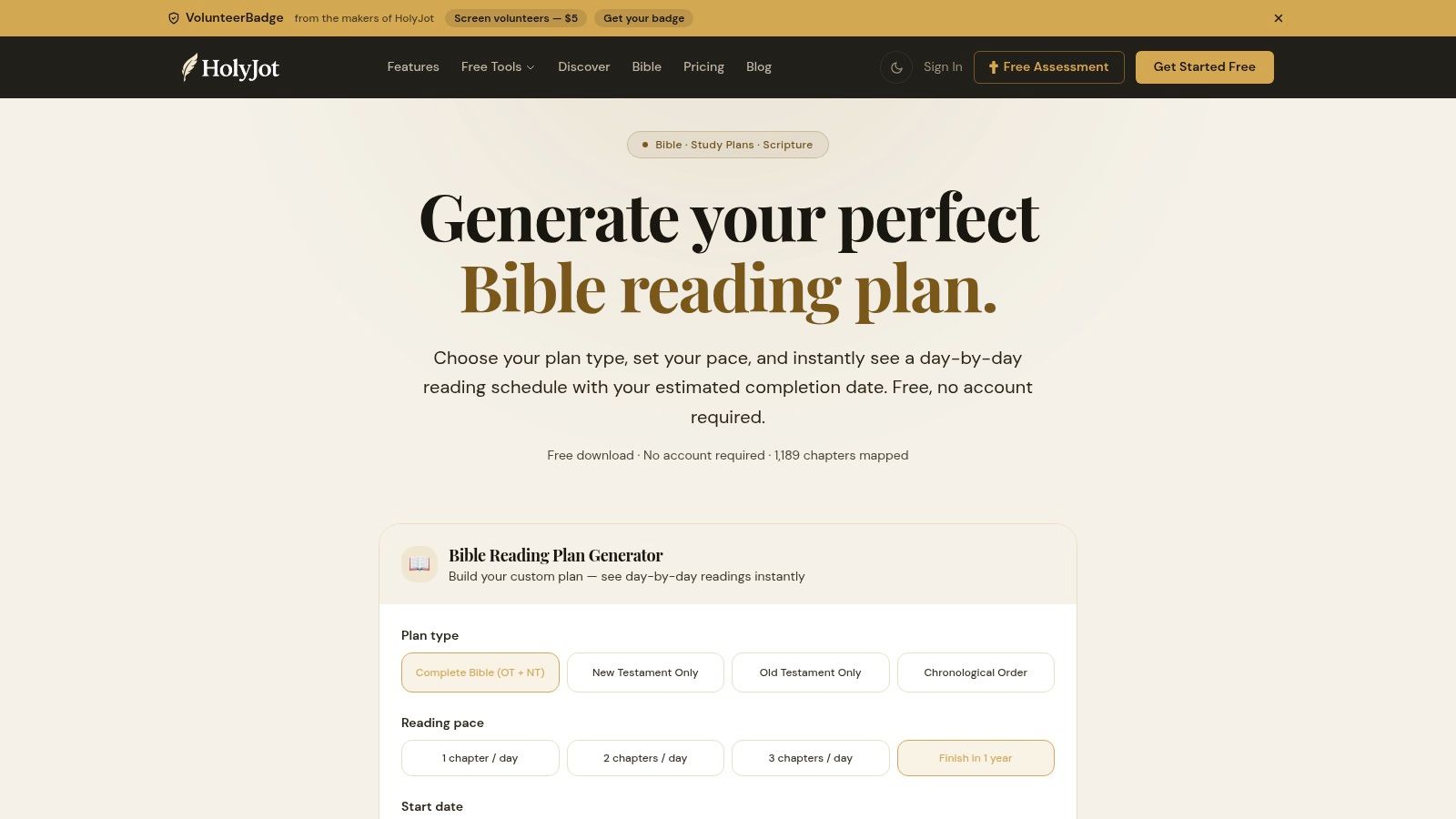
That's the main advantage over a fixed calendar. You aren't locked into someone else's decision about reading seven days a week, mixing testaments, or moving straight through in Bible order. A parent with four solid mornings needs a different shape than a retiree who reads daily after breakfast. A new believer may do better finishing the New Testament in six months with room to reread.
Structured help matters because most readers go without it. The Center for Bible Engagement research on reading plans reports that plan users are more likely to report reading the entire Bible than non-users, at 63.6% versus 36.9%. The plan itself removes the daily question of where to start.
Where this helps after a missed week
Because you set the pace yourself, you can build slack in from the start. A route that leaves one or two open days each week turns a missed Tuesday into a Saturday reading instead of a backlog. If travel or shift work will interrupt you, choose a smaller scope for six months rather than shrinking every passage into rushed reading.
Practical rule: Set the pace for the week you actually live most often. If you can read on five mornings, build a five-morning plan and protect those five.
The trade-off is honest. Most generators hand you the calendar and stop there, so reminders and progress tracking stay on you. A paper checklist taped inside your Bible or a recurring phone alarm covers that gap for free. If you'd rather have the structure built in, HolyJot's study plans give each day a passage, a reflection prompt, and a dedicated journal, followed day by day at your own pace, with an option to study with a group. Journaling, the Bible reader, and the plans are free with no subscription.
- Free to use: You can create a plan without committing to a paid program.
- Flexible scope: Full Bible, one testament, or chronological order all work.
- Adjustable pace: You can fit the load to a six-month window or another season.
Start here if your schedule is the reason past plans failed. A custom load you chose is easier to defend on a tired morning than a preset load you resent.
2. YouVersion - Whole Bible in 6 Months
YouVersion is the simplest start if you want to open an app tomorrow and read. The Whole Bible in 6 Months plan on YouVersion covers the whole Bible in 180 days. Each day draws from the Old Testament, Psalms and Proverbs, and the New Testament, so you don't spend weeks in only one kind of writing.
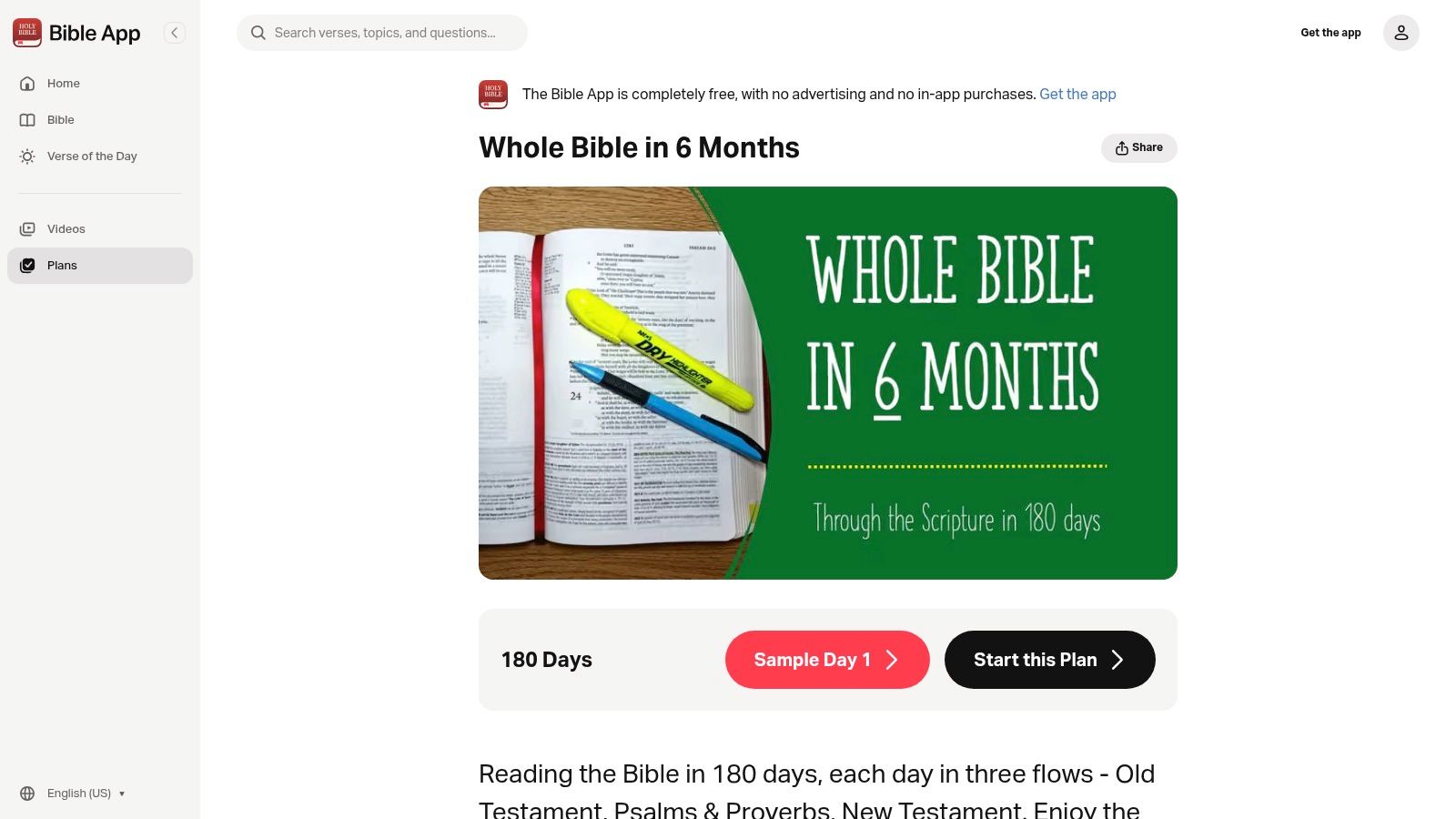
That three-flow structure helps on heavy days. A long stretch of law or prophecy sits beside a psalm and a Gospel or letter passage, which gives you a place to pray and a clearer thread to carry into the day. For readers who get bogged down reading cover to cover, variety isn't decoration. It's what keeps the next morning welcome.
The wider picture shows why a phone-based route suits many people. In 2023, 20% of Protestant churchgoers said they would read Scripture from an app during time alone with God, according to Lifeway Research on online Bible reading. If your phone is already where your alarm and calendar live, your reading plan belongs there too.
Load and recovery
The load is still a six-month whole-Bible load, even with variety. Don't expect short devotional readings. On busy days, read one flow in the morning and the others at lunch or in the evening rather than skipping the whole day because you can't sit for one long session.
If you miss a week, you've got a real pile to face. Skip the guilt math, restart with the current day if the app allows you to shift dates, or read the missed New Testament portions first to regain momentum. Try not to read double for many days in a row. That's where comprehension drops.
The plan is credited to an individual contributor rather than presented as a YouVersion editorial plan, and the fast pace leaves less time for reflective study. Choose it if you want free access, a clear start page, and daily variety with almost no setup.
3. Bible Study Together - Rapid Chronological Cross-Reference Plan
Some readers don't struggle mainly with time. They struggle with context. They read a prophet and can't place the king, or they read a psalm without seeing the story behind it. Bible Study Together's Rapid Chronological Cross-Reference Plan connects Old and New Testament passages through a chronological cross-reference approach, with daily study questions and challenges alongside the reading.
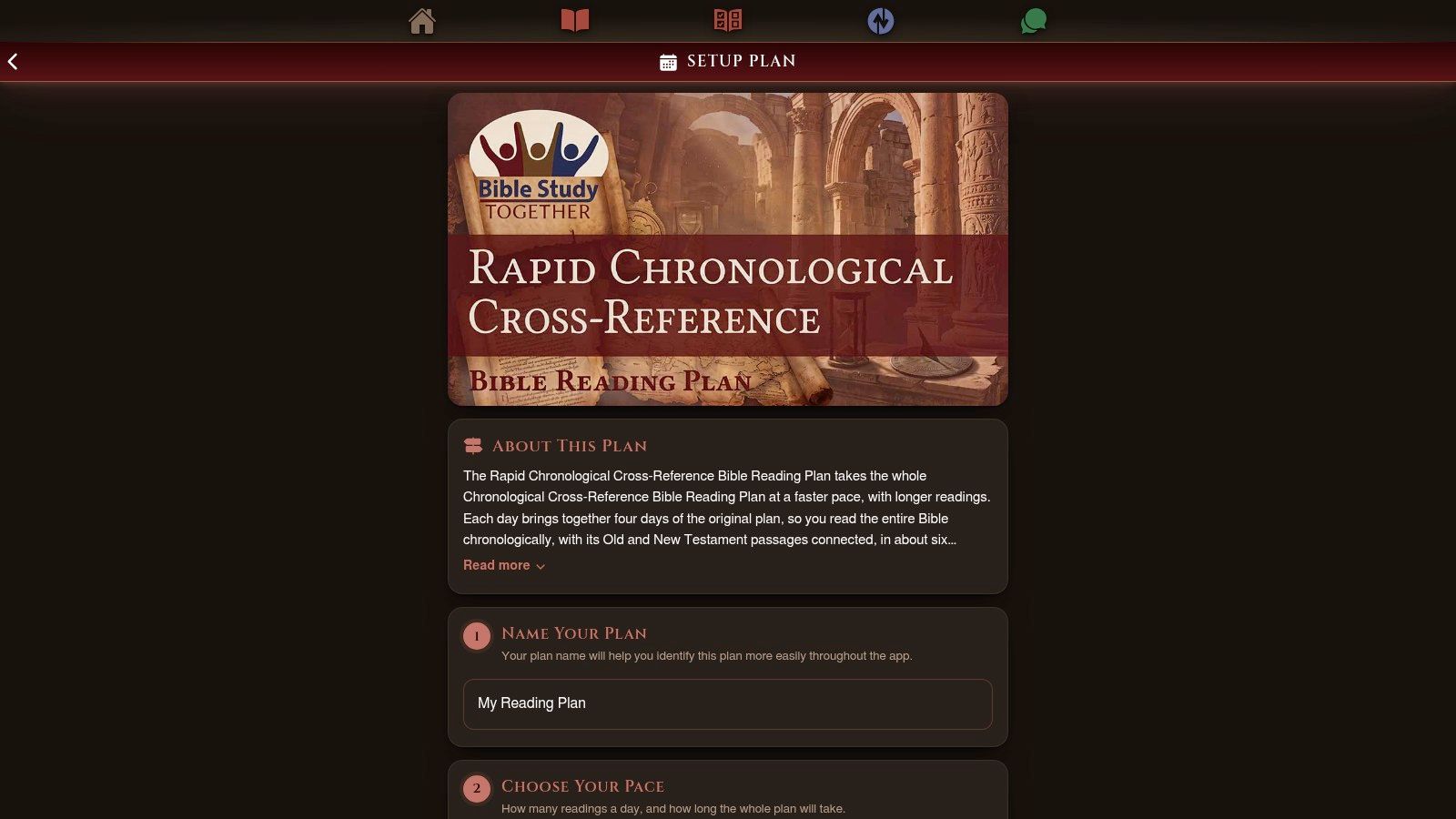
You can set the pace to about six months, with faster options also listed, and you can choose a flexible start date. Audio Bible listening and group schedule synchronization make this stronger for a small group or a couple who want to stay on the same reading even when one person listens during a commute. If a six-month pace proves too much, a slower route such as a 3-year Bible reading plan is a better long-term fit than forcing this study load into crowded days.
Who should pick the study-heavy route
Pick this if questions help you pay attention. A prompt gives you something to look for in genealogies, prophecy, and letters that can otherwise blur together at speed. It also gives a group a shared starting point beyond asking whether everyone finished.
Don't pick it if you only want a checklist. The features take more orientation than a printable schedule, the setup page requires JavaScript, and the accelerated pace means longer daily readings before you even answer a question. On a missed week, group synchronization can either pull you back in or make the gap feel public, depending on your group.
Read the passage first, answer one question well, and leave the rest. One honest observation beats four rushed answers you'll never look at again.
I see this as the best fit for a committed group with a facilitator who'll set the start date, agree on the pace, and normalize catching up without shame.
4. BiblePlan - Custom 6-Month Reading Plan
BiblePlan is built for the reader who knows in advance that some days won't happen. The BiblePlan 6-month plan builder lets you choose the whole Bible, the Old Testament, the New Testament, the Gospels, or Psalms and Proverbs. You customize reading days, including skipping Sundays, and the tool balances readings across the days you make available.
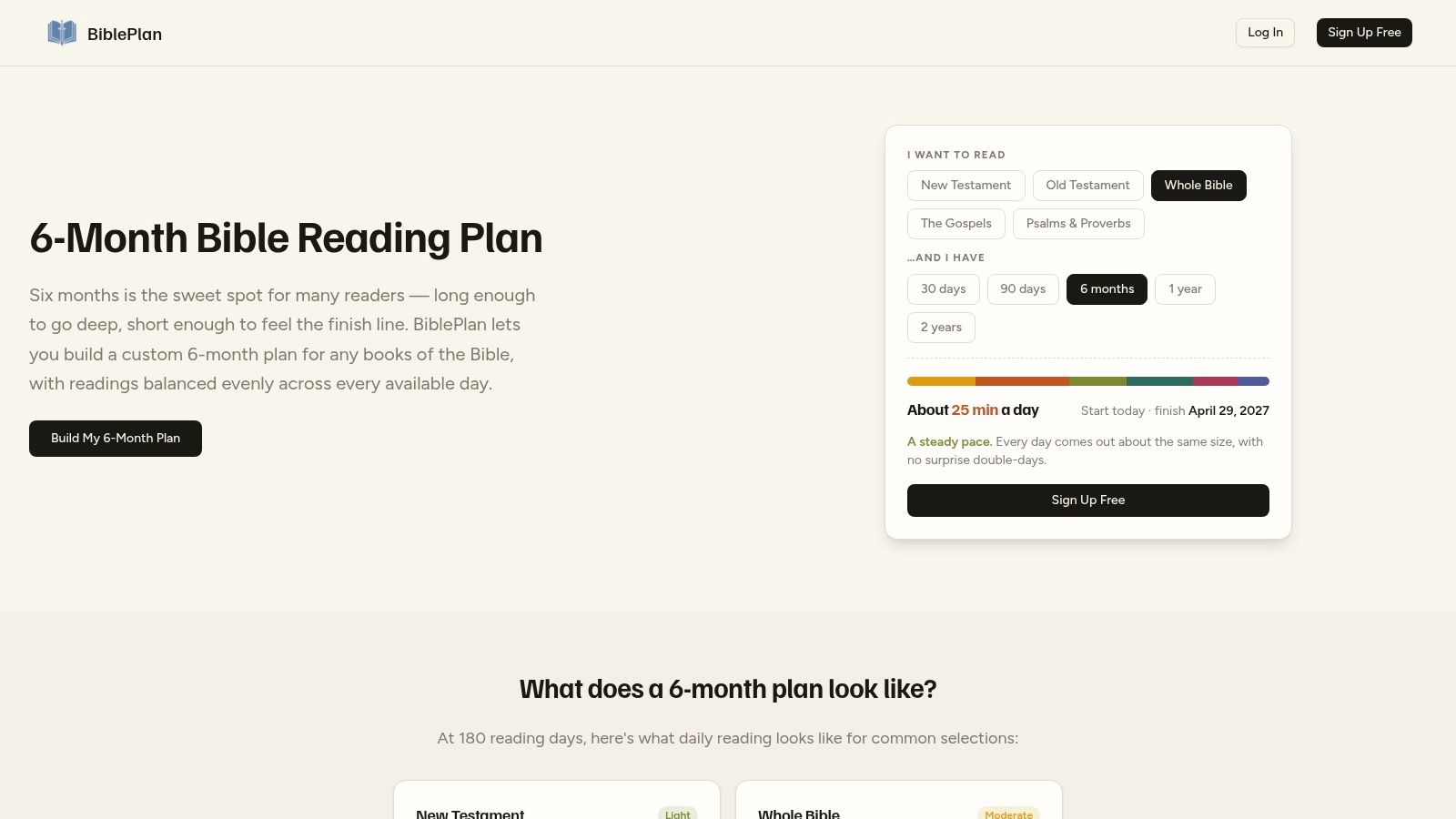
The standout feature is recovery. BiblePlan includes progress tracking, streaks, and daily email reminders, and it can rebalance remaining readings after missed days. That changes the missed-week math completely. Instead of facing one huge catch-up day, the remaining load is spread forward, so each day grows a little rather than a lot.
That's also where many Bible reading plans for 6 months fail people. They work until illness, travel, or a family crisis hits, then the backlog becomes the reason to quit. A rebalancing builder treats interruption as normal. If you're comparing app-based help more broadly, this guide to choosing a Bible reading plan app can help you weigh reminders against simplicity.
- Custom reading days: Skip Sundays or other days you know are full.
- Even workloads: Readings are balanced across available days by design.
- Free and without ads: The site describes the service in those terms.
You do need to choose and set up your own plan, which takes a few honest minutes. Estimated reading times also vary with translation and pace, so test your first week before locking in a harder scope. If your first three days all run long, reduce the scope early. Don't wait until week six to admit the load is wrong.
I recommend BiblePlan for busy parents, shift workers, and anyone returning after a failed attempt. The recovery feature is more valuable than a prettier starting page.
5. The Fellowship Table - The Bible in 6 Months
Cover-to-cover readers often don't want three flows, themes, or cross references. They want to start in Genesis and end in Revelation, in order. The Fellowship Table plan does exactly that over 182 days, using whole chapters and estimating about 30 minutes of reading per day.
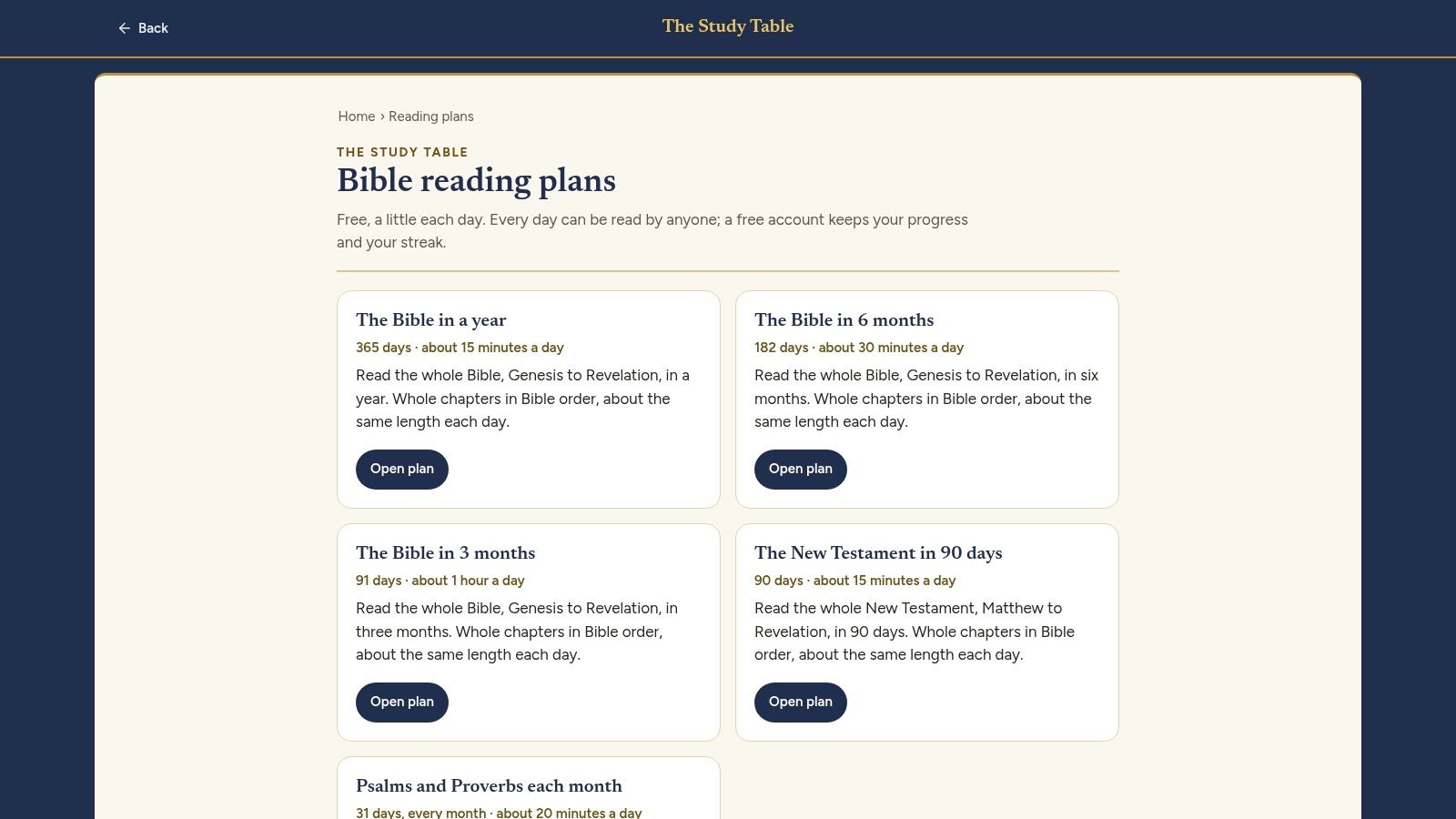
The math behind that estimate is worth seeing clearly. A Bible books, chapters, and verses chart lists 1,189 chapters in the standard 66-book Protestant Bible, with 929 in the Old Testament and 260 in the New Testament. Spread over 182 days, that's about six and a half chapters a day. Some chapters are short psalms. Others are long narratives. Whole-chapter readings keep the breaks clean, but daily length won't feel identical.
Straight order, real strengths and limits
Bible order makes progress easy to explain and easy to find again. You always know where you are, and you can read without an account. A free account saves progress and streaks if you want them. For a church group reading together, that simplicity helps because everyone can locate the day's passage in any print Bible.
The limit is the middle. You'll spend a long stretch in the Old Testament before you reach the Gospels, and the plan page doesn't emphasize study prompts or reflection materials. If you miss a week, don't try to recover it in one Saturday. Read one extra chapter a day, or accept finishing a week late.
Thirty minutes a day is a significant commitment, but it's stated up front. I'd rather have that honesty than a plan that promises a quick read and demands half an hour. Choose this if order, simplicity, and a clear time estimate matter more to you than daily variety.
6. Holy Joys - 6-Month Inductive Bible Reading Plan
Paper still wins for some readers. No notifications, no sign-in, and a page you can mark with a pen. The Holy Joys 6-Month Inductive Bible Reading Plan is a free printable PDF spanning 24 weeks, with five reading assignments per week and designated break or catch-up weeks built into the schedule.
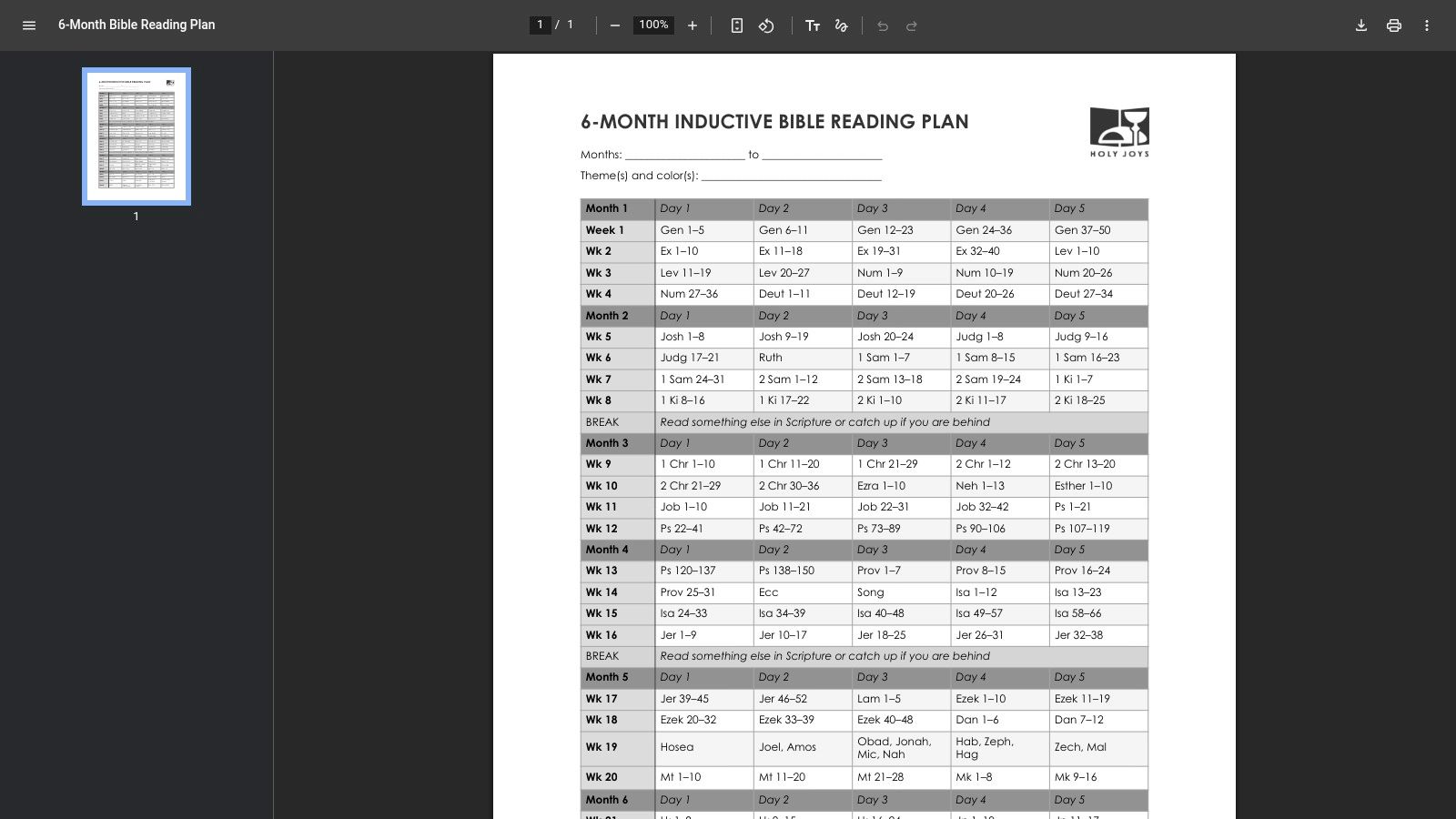
The five-day structure is the draw. Two non-reading days each week give you room for church, family, rest, or catching up before a small slip becomes a backlog. Break and catch-up weeks do the same work at a larger scale. If you've quit daily plans because one missed weekend ruined the streak, this shape may fit you better than any app.
This plan also leaves space to record themes and color-coding choices. That suits inductive study, annotation, and journaling. You're asked to notice repeated words, promises, commands, and character traits of God instead of only checking a box. If annotation is new to you, learning how to properly read the Bible will help you use those theme notes without turning every reading into homework.
What paper asks of you
Progress tracking is manual, and some assignments cover multiple chapters, so five days doesn't mean light days. Print the PDF, keep it in your Bible, and date each assignment when you finish it. That simple record tells you the truth after a busy month.
There's no daily email to pull you back, and it's a schedule, not guided commentary. For self-directed readers who like a pen in hand, that's a strength. For readers who need a reminder, it's the reason to choose an app instead.
Friday check: At the end of each week, write the one theme you saw most often. If you can't name one, reread your marked verses instead of adding more chapters.
7. The VBT - Bible in Six Months
The VBT takes the most direct approach. The VBT Bible in Six Months plan assigns the full Bible day by day over six months, averaging roughly six or seven chapters per day. You sign in to access the reading plan and track progress online.
That clarity helps before you start. Six or seven chapters isn't a verse-a-day devotional pace, and the plan doesn't pretend otherwise. It gives you a finish line and a daily assignment, then leaves the method to you. That means deciding in advance how you'll handle the stretches that slow most readers down, like the genealogies, the Levitical laws, and the longer prophetic books. Plan your own support for hard passages: a study Bible, a commentary, or a patient friend who has read them before.
When a demanding pace works
This works for a consistent reader who already reads daily and wants a faster, focused season. It also works if online tracking is enough accountability and you don't need prompts telling you what to notice. Keep a notebook beside it anyway. At this pace, writing one sentence about what you read protects you from reaching Revelation with only a vague memory of Kings.
It works poorly if your days are unpredictable. Six or seven chapters each day is demanding, sign-in is required to read and track, and the description doesn't highlight journaling prompts or other study aids. After a missed week, you're looking at a large block of unread chapters. Don't read it all in one sitting to save the date. Extend the finish date and keep the daily load human.
I would not hand this to a brand-new reader as a first plan. I would hand it to someone who finished a one-year plan, kept the habit, and now wants a concentrated reread with a clear daily target.
How the seven 6-month Bible reading plans compare on scope, daily load, and tracking
| Item | Scope | Daily Reading Load | Tracking or Reminders | Best For |
|---|---|---|---|---|
| Free Bible Reading Plan Generator, Custom Plans for Every Pace | Full Bible, Old or New Testament, or chronological | Customizable to your pace; no fixed daily amount | Not specified | Readers who want a free, tailored plan |
| YouVersion, Whole Bible in 6 Months | Whole Bible in 180 days; three daily reading flows | Fast-paced; specific amount not stated | Available through the website and Bible App; tracking or reminders not specified | Readers who want a ready-made six-month plan with varied daily readings |
| Bible Study Together, Rapid Chronological Cross-Reference Plan | Whole Bible, chronological cross-reference approach | Accelerated; longer daily readings | Group schedule synchronization and audio listening; reminders not specified | Readers who want study prompts or group reading |
| BiblePlan, Custom 6-Month Reading Plan | Choose whole Bible, Old or New Testament, Gospels, or Psalms and Proverbs | Balanced across selected reading days | Progress tracking, streaks, daily email reminders, and schedule rebalancing | Readers who want a flexible plan with built-in tracking |
| The Fellowship Table, The Bible in 6 Months | Whole Bible, Genesis through Revelation, in 182 days | About 30 minutes daily | Optional account-based progress and streak tracking | Readers who prefer a straightforward cover-to-cover schedule |
| Holy Joys, 6-Month Inductive Bible Reading Plan | Bible readings over 24 weeks | Five reading days per week, with break and catch-up weeks | Manual tracking; printable PDF includes annotation space | Readers who enjoy printable schedules, journaling, and inductive study |
| The VBT, Bible in Six Months | Whole Bible in six months | About six or seven chapters daily | Sign-in access and online progress tracking | Readers comfortable with an accelerated daily schedule |
Pick Your Pace Today and Start Tomorrow Morning
Choose the plan whose daily load you can sustain on your worst week, not your best one. That's the whole decision. If your schedule changes constantly, choose a builder such as HolyJot's generator or BiblePlan and set honest reading days. If you want to open an app and go, YouVersion or The VBT gives you a fixed route. If paper and margin notes keep you attentive, print Holy Joys and keep it in your Bible.
Think about recovery before you need it. A missed week will likely happen sometime in six months because real life includes illness, travel, deadlines, and family needs. BiblePlan rebalances for you, Holy Joys builds in break and catch-up weeks, and a custom generator lets you leave open days from the start. Fixed daily plans require you to decide your own rule in advance, such as adding one chapter a day or accepting a later finish date.
Don't choose by the boldest promise. Choose by minutes. If you can protect a longer morning reading most days, a whole-Bible six-month route is realistic. If you can protect a shorter slot, read the New Testament in six months with attention, then take the Old Testament next. Finishing a smaller scope with understanding is better discipleship than skimming everything to protect a date.
There is real room to grow here. In 2023, churches estimated that Bible reading increased among 34% of their adult regular attendees, stayed the same for 54%, and decreased for 12%, according to the Christian Standard Church Report for 2023. A plan that fits your week puts you in the group that's growing, one ordinary morning at a time.
Write down the time and place you'll read, then start with the first assignment tomorrow. Keep a dedicated journal alongside your reading so each passage leads to one honest reflection, even if it's only two lines. Note what the text says, what it shows you about God, and one response you'll act on.
HolyJot is free to start, because journaling, the Bible reader, study plans, and voice journaling carry no subscription. That means you can test a plan for a full month before deciding whether it fits. After a month, judge it by fruit, not streaks. Are you reading most planned days? Can you recall what you read? Are you praying from the text? If yes, keep going. If not, change the pace, not the goal.
Pick your plan today, before motivation fades into another month of intending to start. Tomorrow morning, open to day one, read slowly enough to understand, and mark the page. Six months from now, you won't remember whether you started on a perfect Monday. You'll remember that you stayed in the Word.
Start your six-month reading with a journal open beside your Bible, so every morning's passage turns into prayer and honest reflection you can return to months later. HolyJot gives you free Bible journaling, a full Bible reader, and guided study plans in one place, making it easier to keep your plan and your notes together. Visit HolyJot today, choose your start date, and write your first entry after tomorrow's reading.